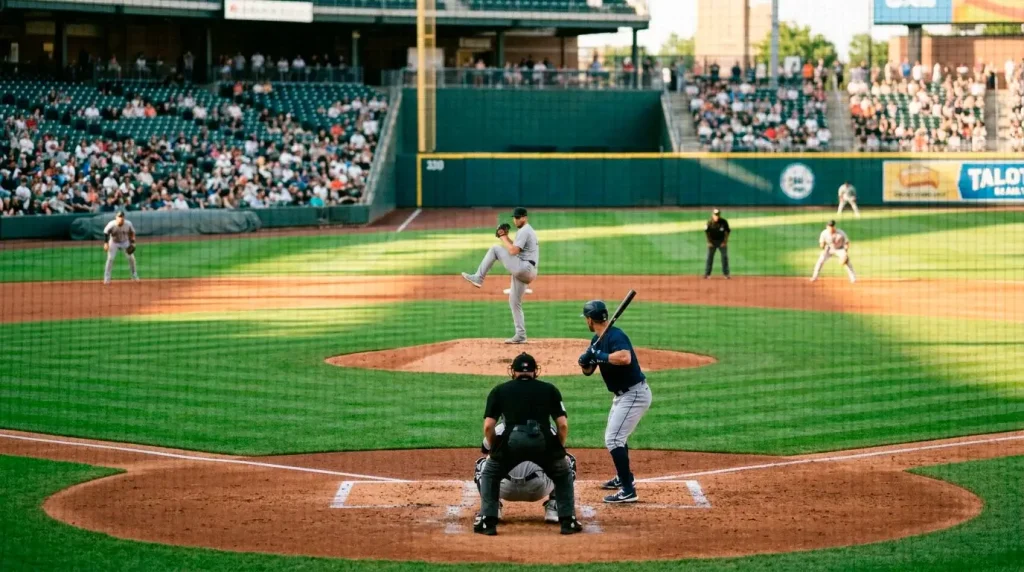
Venue-Specific MLB Ballpark Factors
 Available in US
Ballpark factors are among the most stable variables in baseball. Unlike pitcher form, bullpen health, or weather, the dimensions and environment of a stadium do not change from game to game. A park that boosts home runs in April will boost them in September. That stability makes park factors one of the most reliable inputs you can add to your betting model — and one of the most frequently ignored. With 2,430 regular-season games spread across 30 venues, the park effect compounds into a significant edge for bettors who account for it. The beauty of park factors is that you do not need a sophisticated model to use them — a simple adjustment to your totals projection takes thirty seconds and can shift the value from one side of the line to the other. For a look at how weather conditions layer on top of these structural factors, the weather impact guide covers wind, temperature and humidity.
Measuring Stadium Dimensions and MLB Altitude Factors
A park factor is a ratio that compares how a particular statistic — runs, home runs, hits, doubles — occurs at a given ballpark relative to the league average. A park factor of 1.00 means the park is perfectly neutral. Above 1.00 means the park inflates that statistic; below 1.00 means it suppresses it. Coors Field carries a run-scoring park factor around 1.30 to 1.40, meaning roughly 30-40% more runs are scored there than at a neutral venue. Oracle Park in San Francisco sits around 0.85 to 0.90 for runs, meaning the park suppresses scoring by 10-15%.
The best free sources for park factors are ESPN’s park factor page, FanGraphs, and Baseball Reference. Each calculates the factor slightly differently — some use three-year rolling averages, others use single-season data — but the broad rankings are consistent. I use a three-year average because it smooths out the noise from a single season where one team’s roster may have been unusually strong or weak at home.
For betting purposes, the run-scoring park factor is the most useful number because it applies directly to totals. The home run park factor is essential for HR props, and the doubles factor can influence run-line bets where extra-base hits produce runs in tight games.
Highest and Lowest Run-Scoring Parks: Impact on Totals and Moneylines
At the top of the run-scoring scale, Coors Field is in a category of its own. The altitude — 5,280 feet above sea level — reduces air density, which means the ball travels farther and curveballs break less sharply. Both effects increase offence. Totals at Coors are routinely set 1.5 to 2.0 runs above what the same pitching matchup would produce at a neutral venue, and even with that adjustment, the over has been a slight long-term winner because the market still underestimates the altitude effect in extreme weather conditions.
Below Coors, several parks cluster in the hitter-friendly tier. Great American Ball Park in Cincinnati, Globe Life Field in Arlington, and Fenway Park in Boston (particularly for right-handed power hitters, given the short left-field wall) all carry run factors above 1.05. Wind of 1 mph adds 3 feet of ball flight, a temperature increase of 10 degrees Fahrenheit boosts flight distance by 1%, and a 1-inch drop in air pressure extends it by 1.5% — and these weather effects stack on top of the structural park factor. A warm, windy night at Great American Ball Park can push the effective park factor well above its baseline.
At the run-suppressing end, Tropicana Field, T-Mobile Park in Seattle, and Petco Park in San Diego consistently sit below 0.95. These parks feature deep outfields, heavy air (in Seattle’s case, marine-layer air that thickens at night), and pitcher-friendly dimensions that reduce both home runs and extra-base hits. Totals in these parks deserve a downward adjustment that many bettors overlook, particularly when two strong starters are matched up.
Adjusting Your Betting Model for Ballpark Effects
My adjustment is simple and multiplicative. I start with a base total projection derived from the two starting pitchers’ expected run allowance (using xERA and innings-pitched projections), then multiply by the park factor for runs. If my base projection is 8.2 runs and the park factor is 1.15, the adjusted projection becomes 9.4. If the market total is set at 8.5, I have nearly a full run of edge on the over.
The adjustment works in reverse for suppressive parks. A base projection of 8.2 in a park with a 0.88 factor becomes 7.2 — and if the market is still posting 8.0, the under has clear value. The most profitable applications tend to be at the extremes of the park-factor distribution, where the discrepancy between the market line and the adjusted projection is largest.
One refinement that improved my results was applying park factors to specific batter handedness. Some parks are asymmetric — Fenway’s short left-field wall hurts left-handed pitchers but barely affects right-handers, while Yankee Stadium’s short right-field porch punishes lefties throwing to right-handed pull hitters. The generic run-scoring park factor captures the overall effect, but splitting by handedness adds precision for moneyline and run-line bets where the lineup composition matters.
The final rule: always re-check the park factor at the start of each season. Occasionally, a park undergoes a structural change — a wall height adjustment, a humidor installation to control ball conditions, or a seating reconfiguration that alters wind patterns. These changes can shift the factor by several percentage points, and bettors who rely on stale three-year averages without accounting for physical changes will be working with an outdated input.
What are park factors in MLB betting?
Park factors are ratios that compare how a specific statistic (runs, home runs, doubles) occurs at a given ballpark relative to the league average. A factor of 1.00 is neutral; above 1.00 means the park inflates that statistic; below 1.00 means it suppresses it. For bettors, the run-scoring park factor is the most useful input for totals bets, while the home run park factor is essential for HR props.
Does Coors Field affect the run line more than the moneyline?
Coors Field inflates run scoring by roughly 30-40% above a neutral venue, which affects totals and run lines more directly than the moneyline. The run line at Coors is harder to cover because the 1.5-run margin is a smaller percentage of the higher total. The moneyline is still affected because higher-scoring games are more volatile, but the most exploitable Coors edge is in the totals market.
This material was created by the bestmlbbetuk.com team.
Related posts

Weather Impact on MLB Betting: Wind, Temperature and Air Pressure Quantified

MLB Betting Mistakes: The Ten Errors That Drain Your Bankroll Fastest