
Weather Impact on MLB Betting: Wind, Temperature and Air Pressure Quantified
 Available in US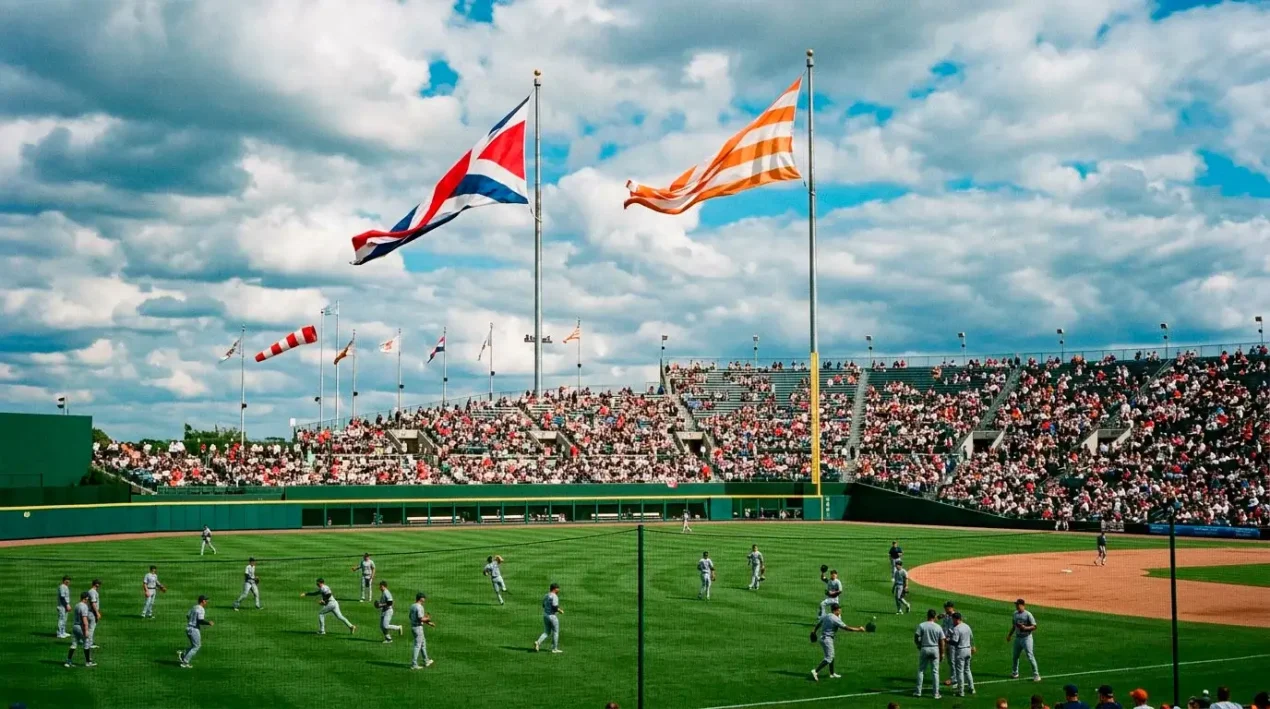
I lost three over bets in a single week because I ignored the weather forecast. Three games at Wrigley Field, all with wind blowing in from the lake at 15-plus miles per hour, and I backed the over in every one because the pitcher matchups pointed to runs. The wind held fly balls in the yard, and each game finished under the total by two or more runs. That week cost me real money and taught me a lesson I haven’t forgotten: in open-air ballparks, weather isn’t a tiebreaker — it’s a primary variable that belongs in every model before the pitcher matchup data.
The physics are well documented. Wind of one mile per hour changes ball flight by approximately three feet, a temperature increase of ten degrees Fahrenheit boosts ball flight distance by roughly 1%, and a drop of one inch in air pressure extends distance by about 1.5%. Those numbers sound small in isolation, but they stack. A hot, windy day at Wrigley with the breeze blowing out can add 20 to 30 feet to a well-struck fly ball — the difference between a warning-track out and a home run. For totals bettors and home run prop players, weather isn’t noise. It’s signal.
In this guide I’ll break down the three weather variables that matter most, explain why domed stadiums create a fundamentally different betting environment, and show you the free tools I use to check conditions before every bet. If you’ve already read the MLB totals betting guide, consider this the weather supplement that sharpens your total estimates by half a run or more.
The Physics of Ball Flight: How Wind, Heat and Pressure Change Distance
During a July series in 2024, I tracked ball-flight data at Coors Field alongside the weather station readings from the stadium. Two games had near-identical starting pitchers and lineups but drastically different conditions — the first was 28 degrees Celsius with calm air, the second was 35 degrees with a 12-mph wind blowing to centre. The second game produced four home runs; the first produced zero. Same park, different atmosphere, completely different scoring outcomes.
Wind is the most powerful weather variable because its effect is directional and immediate. A 10-mph wind blowing straight out to centre field adds roughly 30 feet to a fly ball hit in that direction. The same wind blowing in subtracts the same distance. Crosswinds create lateral movement that can push a ball fair or foul, but their effect on total distance is smaller — perhaps 10 to 15 feet on a 400-foot blast. What matters for bettors is wind direction relative to the batter’s pull side and the stadium’s orientation. Wrigley Field’s flags are the most famous wind indicator in baseball for good reason: the park faces northeast, and the prevailing wind off Lake Michigan shifts day to day, turning the stadium from a pitcher’s haven into a bandbox and back again.
Temperature affects air density. Hotter air is less dense, which means less drag on the baseball. The 1% distance increase per ten-degree rise translates to roughly four extra feet on a 400-foot fly ball for every ten-degree jump. At surface level, that’s marginal. But when you combine heat with altitude — like at Coors Field, where thin air already reduces drag — the cumulative effect pushes balls over fences that would stay in the park at sea level in cooler conditions.
Air pressure is the least discussed variable but arguably the most predictive for day-to-day fluctuations. A drop of one inch of mercury in barometric pressure extends ball flight by 1.5%, which is more than temperature on a per-unit basis. Before a storm front moves through a city, pressure drops, and fly balls carry further. I’ve seen multiple games at outdoor parks where a pre-storm low-pressure system coincided with a scoring spike that caught the market off guard. Checking the barometric pressure forecast takes thirty seconds and gives you an edge that most bettors never even consider.
Dome Stadiums vs Open-Air Parks: Eliminating Weather as a Variable
There are days when my entire totals card is built around domed stadiums, and that’s not laziness — it’s risk management. In a domed park, I know the conditions with certainty before the first pitch. Temperature is fixed, wind is zero, humidity is controlled. The only variables left are the pitchers, the lineups and the park dimensions. That reduction in unknowns makes my model more reliable, and reliability is what separates a profitable bettor from a clever one who still loses money.
MLB has several domed and retractable-roof stadiums: Tropicana Field (permanent dome), Chase Field, Globe Life Field, Minute Maid Park, American Family Field, Rogers Centre and loanDepot Park all feature roofs that close regularly. When the roof is closed, these parks behave like controlled environments. When it’s open, they revert to outdoor conditions. The key for bettors is confirming roof status before placing a totals bet — a retractable roof that’s open in 35-degree July heat in Texas creates a completely different run-scoring environment than the same park with the roof sealed and the air conditioning running.
The practical takeaway: if your totals model doesn’t account for weather and you want to reduce variance without adding complexity, focus your bets on domed venues. You’ll have fewer games to choose from on any given day, but the games you do play will be evaluated with higher-confidence inputs. In a sport where the margin between a profitable and unprofitable bettor is often two or three percentage points in win rate, eliminating one major source of model error is worth the reduced volume.
Free Weather Tools and When to Check Them Before Betting
Martin Green, a veteran iGaming writer, has noted that keeping detailed records unlocks a wide range of benefits for sports bettors. I’d extend that to weather data: logging the conditions for every game you bet on reveals patterns in your results that pure pitcher analysis misses. Over a full MLB season of 2,430 games, the bettors who track weather alongside their plays can identify which conditions they handicap well and which ones burn them.
My daily weather routine takes about ten minutes and uses three free resources. The first is the hourly forecast on weather.gov (for US cities) or an equivalent weather service for the specific stadium location. I check wind speed, wind direction, temperature and barometric pressure at the scheduled first-pitch time, not at noon when I’m doing my research — conditions can change dramatically between early afternoon and a 7:00 pm local start. The second tool is the Wrigley Field wind cam and equivalent wind indicators published by various stadium weather accounts on social media. These give real-time, location-specific wind data that’s more accurate than a citywide forecast. The third is a simple spreadsheet where I log the conditions for every game I bet, then run a quarterly review to see how my results correlate with wind direction, temperature range and pressure.
Timing matters. I place most of my totals bets no earlier than 90 minutes before first pitch, because that’s when the most accurate weather data is available and when lineups are typically confirmed. Betting a total at 9:00 am based on overnight weather models is a recipe for getting caught on the wrong side of a wind shift. The market adjusts too — totals can move half a run between the morning open and first pitch if weather conditions change — so patience is part of the process. Wait for the data, then act.
How much does wind affect MLB home run totals?
Wind is the single most impactful weather variable for home runs. A 10-mph wind blowing out to centre field adds roughly 30 feet to a well-struck fly ball, which can turn warning-track outs into home runs. The reverse is equally true: 10 mph blowing in suppresses home runs by a similar margin. Wind direction matters more than speed alone — a crosswind has less effect on total distance but can push balls fair or foul.
Should I avoid betting on rainy-day MLB games?
Light rain rarely changes the outcome enough to avoid a game entirely. Heavy rain, however, introduces the risk of a delayed start, a suspended game or a shortened game that can affect how your bet settles. The bigger concern is often what comes before rain: a dropping barometric pressure front can inflate ball flight and push scoring higher. Check your bookmaker’s rules on rain-shortened games before placing a full-game bet on a day with significant rain in the forecast.
This material was created by the bestmlbbetuk.com team.
Related posts

MLB Betting Mistakes: The Ten Errors That Drain Your Bankroll Fastest
NRFI Betting Strategy: How to Profit From No Run First Inning Markets in MLB