Smart MLB Spring Training Betting
 Available in US
Spring training is not meaningless — the games produce real data about pitcher velocity, lineup experimentation, and prospect readiness. But for betting purposes, the games are structurally different from the regular season in ways that make profitable wagering nearly impossible. With 2,430 regular-season games to come, the opportunity cost of burning bankroll on exhibitions is steep. This guide explains what spring training markets exist, why they are a trap for most bettors, and how to use the data from exhibition games to gain an edge once the regular season begins. For a look at where that early-season data feeds into long-term bets, the MLB futures guide covers season win totals and World Series odds.
Exhibition Baseball Markets vs Regular Season MLB Lines
Most major bookmakers offer moneylines and totals on spring training games, though the selection is thinner than during the regular season and the limits are much lower. You will rarely find run lines, player props, or first-five-innings bets during exhibition play because the lineup uncertainty makes pricing those markets impractical.
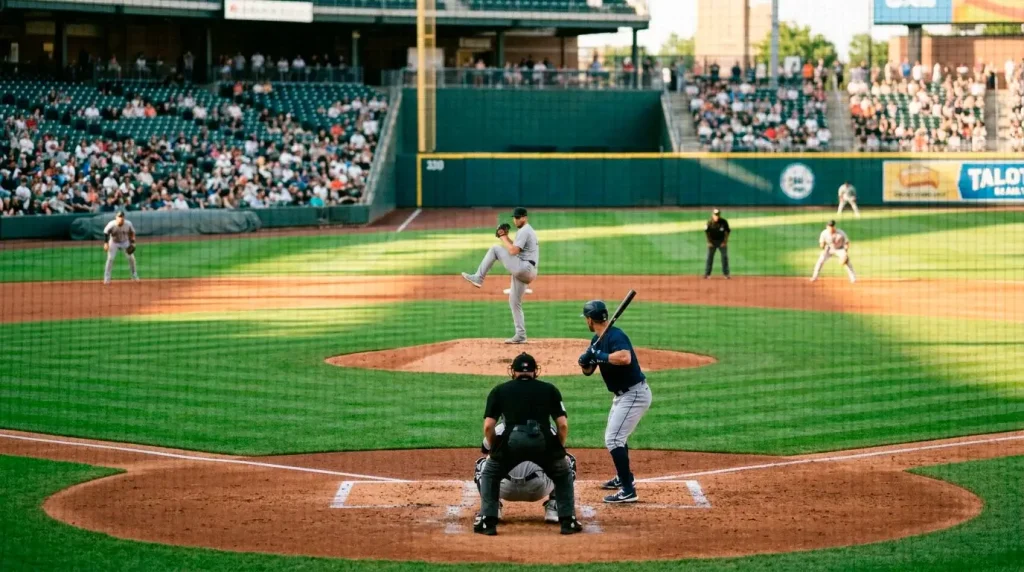
The critical difference is that spring training games are not played to win. Managers use exhibition games to evaluate players, build pitcher stamina, and test lineup combinations. A starter might throw three innings at 75% effort and then give way to a string of minor-league relievers. Starters are often pulled after 50 to 60 pitches regardless of the game situation, and position players are substituted freely throughout the game. By the fifth inning, the lineup that started the game may have been replaced entirely by prospects and fringe roster candidates.
This structural reality means that the moneyline and total you are betting on bear almost no relationship to the team’s actual strength. You are not betting on the Dodgers or the Yankees — you are betting on whichever collection of players the manager decides to deploy on a given day, with no guarantee that the regulars will play more than four or five innings.
Why Most Sharp Bettors Avoid Spring Training Entirely
The two pillars of profitable betting — reliable data and consistent conditions — are both absent during spring training. The data problem is severe: preseason statistics are contaminated by small samples, uneven competition (major leaguers facing minor leaguers), and deliberate effort reduction by established players who are building toward Opening Day rather than trying to win today’s game.
The national hold rate for US sportsbooks reached 10.15% in 2025, and during spring training that margin is effectively wider because the bookmaker’s pricing advantage is amplified by the information asymmetry. The bookmaker knows that the public will bet on familiar team names regardless of who is actually playing, and sets the lines accordingly. Sharp bettors, who normally exploit closing-line value and data-driven models, find that neither tool works during exhibition season because the inputs are unreliable.
I surveyed my own spring training results across three seasons and found a -9.2% ROI — worse than blind random betting would produce. The variance was enormous: one lucky week in 2022 masked two terrible months. The lesson was clear: the edge I have during the regular season simply does not exist when the games are designed for evaluation rather than competition. Since 2023, I have not placed a single spring training bet, and my overall annual ROI has improved as a result — not because I found new edges, but because I stopped burning units on a market where no edge exists.
Using Spring Training Data for Regular-Season Futures and Totals
The real value of spring training for bettors is not in betting the games themselves but in mining the data for regular-season edges. Pitcher velocity readings during March are the most actionable data point. A starter who reports to camp throwing 2 mph harder than his 2024 average is likely to have improved — possibly due to a mechanical adjustment, offseason conditioning, or recovery from an injury that had been sapping his stuff. That velocity gain will not be reflected in the opening regular-season lines, which are built from last year’s statistics.
Conversely, a pitcher whose spring velocity has dropped is a warning sign that the market may not have priced in. Early-season totals and moneylines are set using preseason projections, and a significant velocity decline does not filter into those projections until several regular-season starts produce updated data. The window between Opening Day and mid-April is where spring velocity intelligence translates into actual betting edge.
Prospect call-ups and lineup changes announced during spring training also feed into futures. If a team’s top batting prospect earns a roster spot, the team’s season win total over might carry more value than the preseason line reflects. Similarly, a bullpen that looked shaky during exhibitions — high walk rates, declining velocity from key relievers — may be weaker than the market projects, making the team’s under more attractive. The discipline is to observe spring training without betting it, and then act on that information once the real games begin.
Can you bet on MLB spring training games?
Yes, most major bookmakers offer moneylines and totals on spring training games, though the selection is limited and betting limits are lower than during the regular season. However, the structural nature of exhibition games — short starts, frequent substitutions, and lineups filled with minor-league players — makes profitable betting extremely difficult. Most sharp bettors avoid spring training wagers entirely.
Is spring training performance a good predictor of regular-season results?
Team win-loss records in spring training have virtually no predictive value for the regular season because the games are not played competitively. However, individual performance data — particularly pitcher velocity readings and prospect evaluations — can provide useful intelligence for regular-season betting. A pitcher’s spring velocity relative to his previous year is one of the most actionable data points available before Opening Day.
This material was created by the bestmlbbetuk.com team.
Related posts

Weather Impact on MLB Betting: Wind, Temperature and Air Pressure Quantified

MLB Betting Mistakes: The Ten Errors That Drain Your Bankroll Fastest